
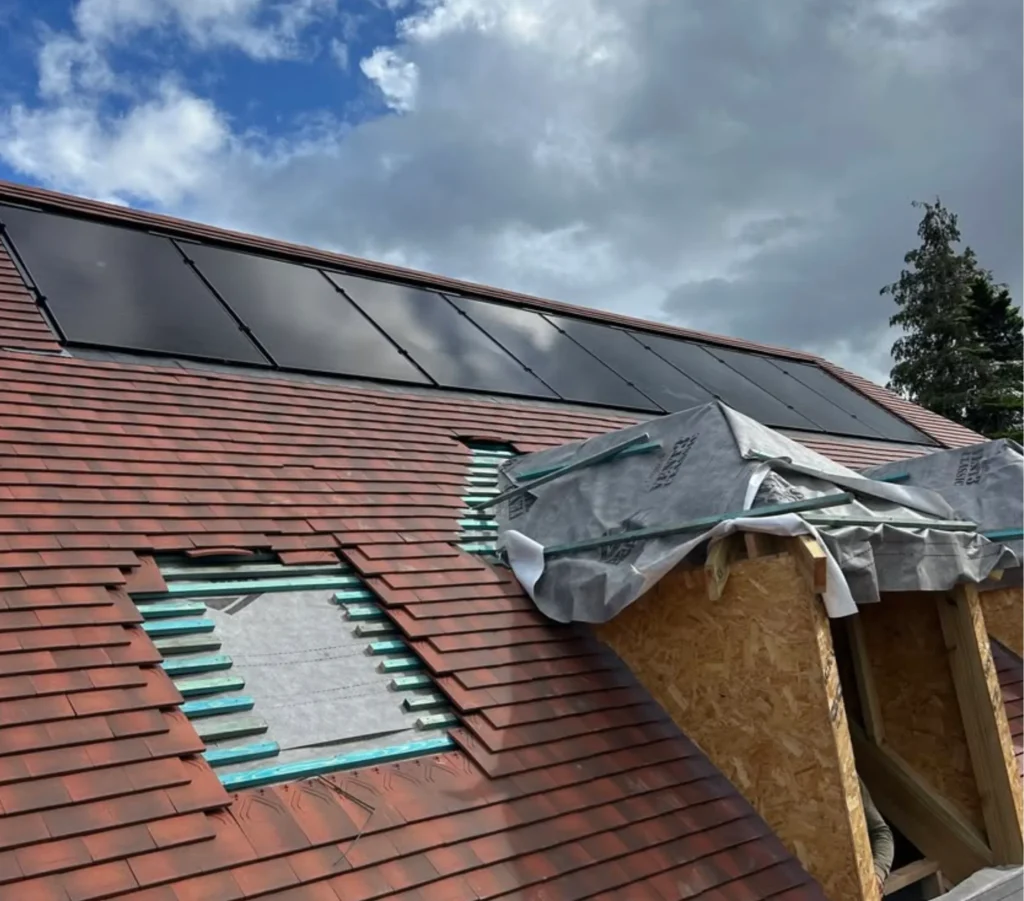
Squinting up at a dusty set of solar panels on a blistering suburban roof, I started to wonder what kind of water was best for cleaning solar panels – because let’s be honest, a lot of the confusion we see out on jobs comes from people just using whatever water source is handiest. And yeah, it looks like a no-brainer at first. But solar panels are pretty finicky. If you use the wrong water, you can swap one type of mess – like dust, bird droppings or grime – for a whole new one: chalky streaks that will knock your energy production for six faster than a mean fly on a hot summer day.
Contents
- 1 Why Water Quality Matters
- 2 Getting a Grip on Your Water Options
- 3 Tap Water: Convenient But Likely to Cause Problems
- 4 Rainwater: Cleaner, But Still Not Good Enough
- 5 Distilled Water: The Cleanest, But Not the Most Practical
- 6 Deionised (DI) Water / RO-DI Purified Water: The Pros Know What They’re Doing
- 7 Table: Water Types Compared
- 8 How Dirty Water Damages Rooftop Energy Systems
- 9 How To Clean Rooftop Energy Systems (A Tradie’s Guide)
- 10 Common Cleaning Myths We Hear On-Site
- 11 When To Avoid DIY Completely
- 12 FAQ
Why Water Quality Matters
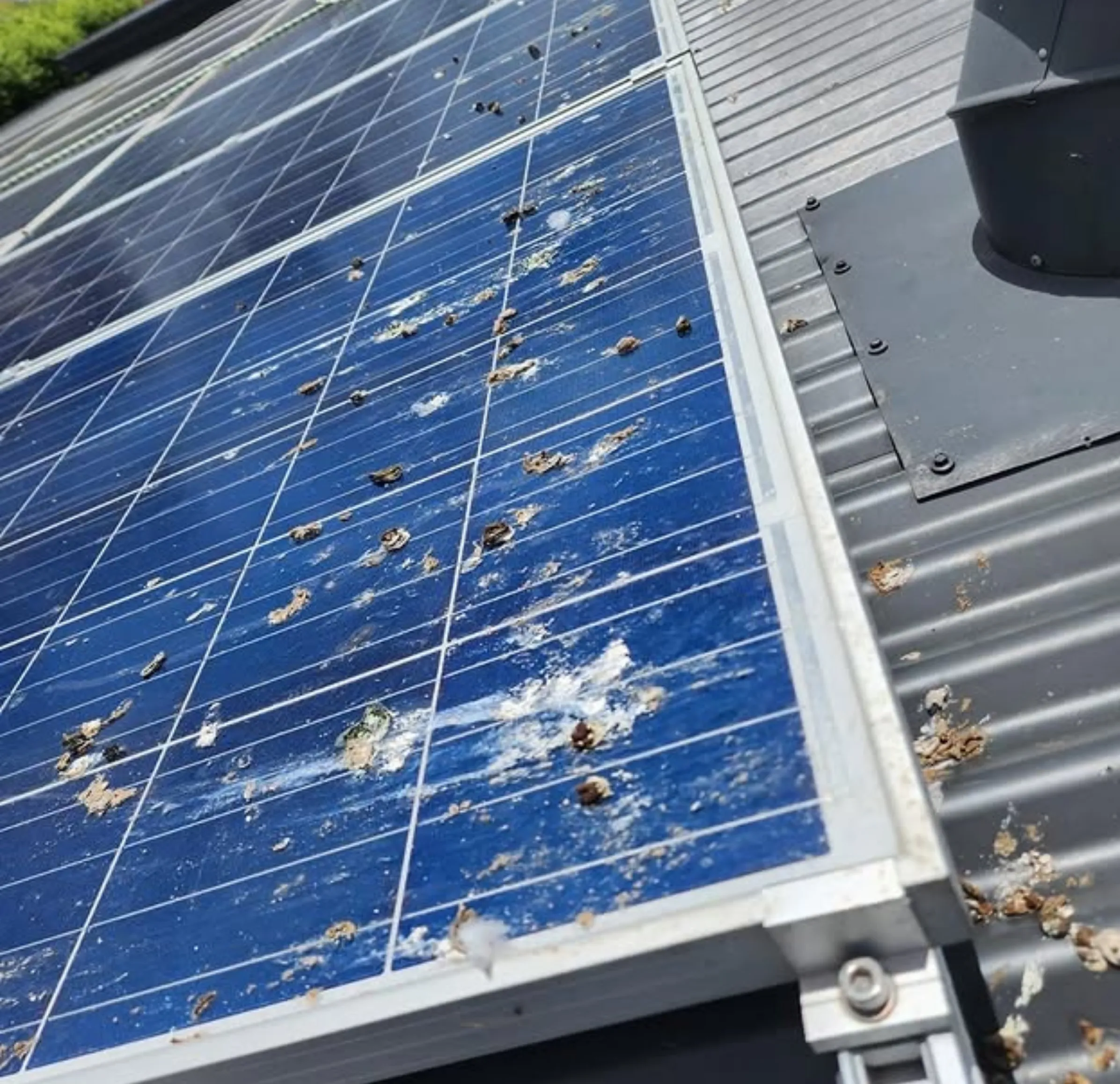
Most people just assume that cleaning solar panels is a bit like giving the car a wash: splash some water around, maybe give it a bit of a scrub, all done. Trouble is, water leaves streaks and residue behind – and that means you lose out on solar energy.
The Clean Energy Council says dirty or poorly maintained solar modules can lose 10-20% of their efficiency, depending on weather, pollution, and local dirt build-up in your area. And if you’re cleaning with water that’s got a lot of minerals in it? That adds to the problem – water spots, scale, grime – that block the sunlight from getting through to the photovoltaic cells.
So yeah, water quality is pretty important.
Getting a Grip on Your Water Options
Here’s the thing – you’ve got a few different types of water to choose from for cleaning services or if you’re doing it yourself:
- Tap water
- Rainwater
- Distilled water
- De-ionised (DI) water / RO purified water
And there’s only one that’s really going to give you that perfect, streak-free clean.
Tap Water: Convenient But Likely to Cause Problems
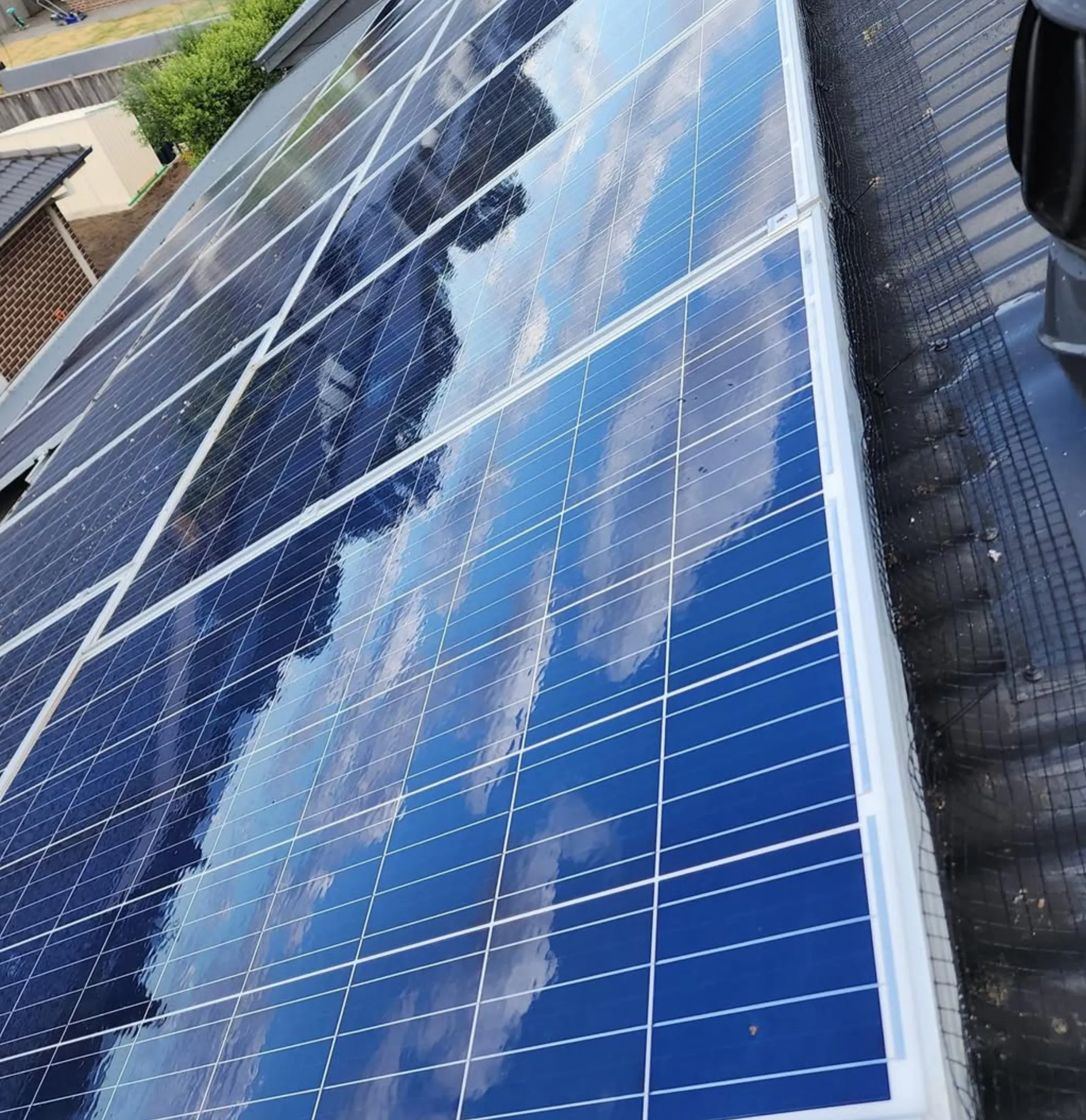
Tap water is probably your quickest option – but it’s got loads of minerals in it, the same stuff that leaves those nasty marks on your bathroom mirrors.
On solar panels, the same thing happens. You give them a good rinse, and they look like new – but then the sun dries the glass, and you’re left with white streaks all over the place. In Melbourne, tap water is particularly dodgy – it can contain 80-120 mg/L of dissolved minerals, enough to interfere with the anti-reflective coating that most modern solar panels have.
If tap water is your only option:
- Use a soft cloth or a quality microfibre cloth after rinsing
- Avoid using high-pressure washers – they can cause all sorts of problems or damage seals
- If you can manage it, give them a tiny bit of distilled water after that
But as a general rule? Where possible, use better-quality water.
Rainwater: Cleaner, But Still Not Good Enough
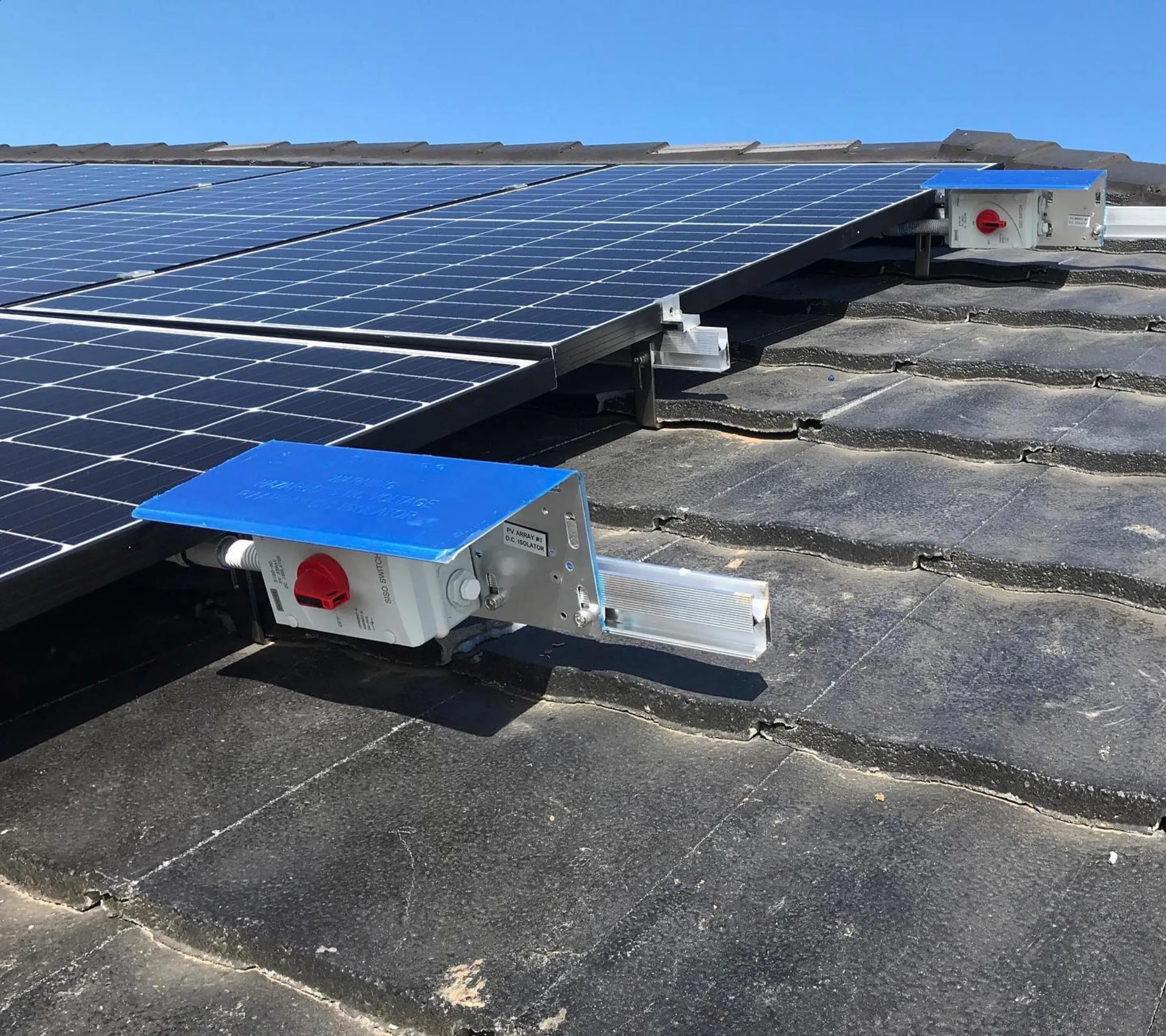
Rainwater looks like it’s clean, but the thing is, it often isn’t – especially if you live in a coastal suburb (salt), an industrial area (pollutants) or a leafy zone (bird poop and all sorts of other organic gunk).
It’s not as bad as tap water, but it’s still not entirely reliable. Solar panels cleaned with rainwater often require a final DI rinse to remove all the sediment.
Distilled Water: The Cleanest, But Not the Most Practical
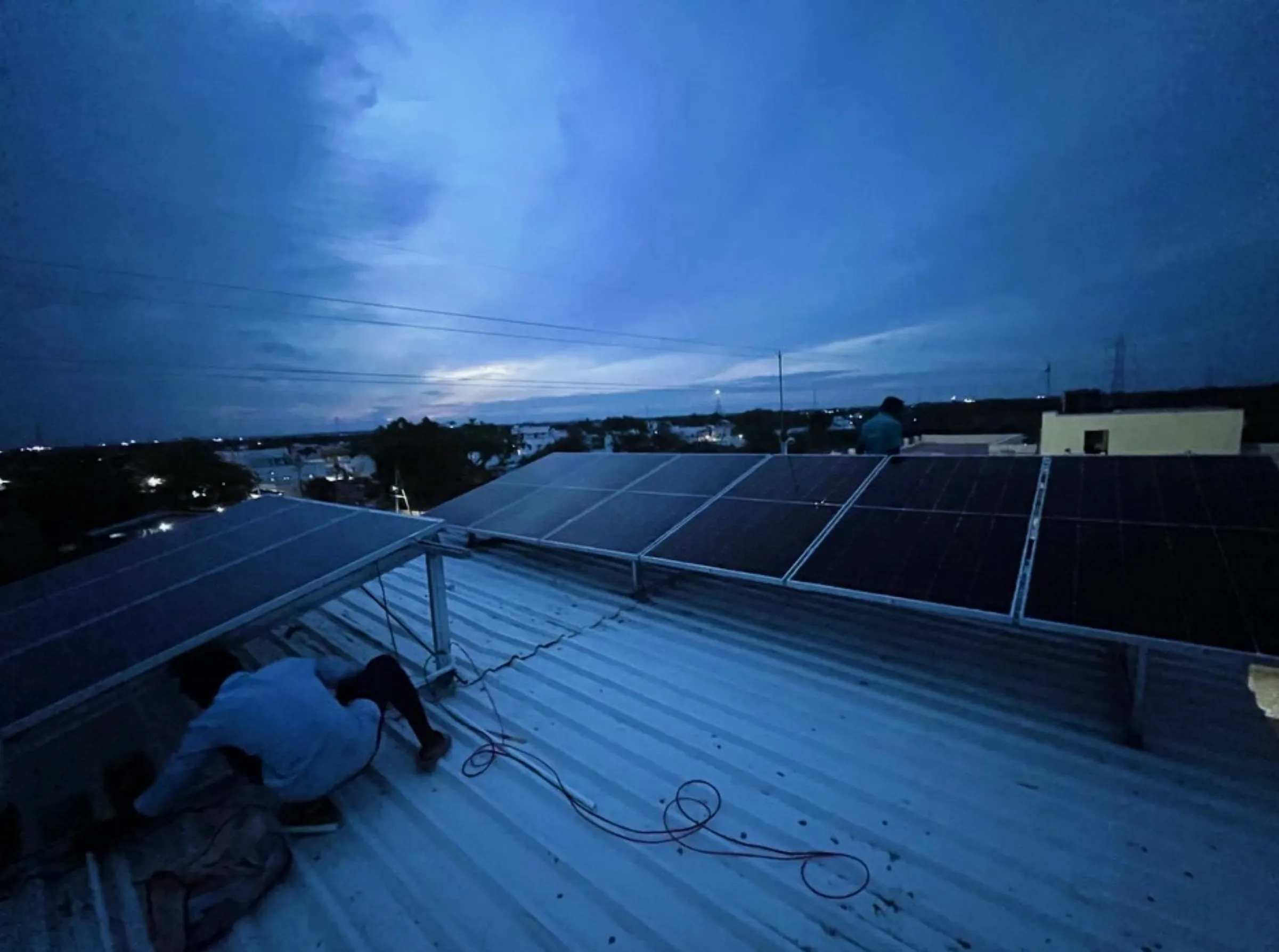
Distilled water is great for cleaning solar panels because:
- Leaves no residue behind
- Doesn’t react with any of the coatings
- Works just fine with soft cloths or microfibre cloths
- Reduces the need for any cleaning solution or harsh products
Downside? It’s heavy to carry and not precisely the most practical option if you’re dealing with a large solar array.
Deionised (DI) Water / RO-DI Purified Water: The Pros Know What They’re Doing
This is the type of water that the pros use. At Window Cleaning Melbourne Crew, we use reverse osmosis filtration systems to create ultra-pure water, and we pair that with DI resin to make it even better.
Why DI water is best for solar panel cleaning services:
- Leaves no mineral residue
- Evaporates flawlessly
- Cuts through grime and organic material
- Prevents build-up that lowers solar energy production
- Safe for anti-reflective coatings
- Works with water-fed poles at safe water pressure
- Doesn’t require any contaminant removal agents or solvents
Good DI water reads 0–5 ppm on a TDS meter.
Table: Water Types Compared
| Water Type | Mineral Content (TDS ppm) | Risk of Spots | Best Use Case | Ease of Use |
| Tap Water | 80–250+ ppm | High | Only emergencies | Very easy |
| Rainwater | 10–50 ppm (variable) | Medium | Light rinsing | Easy |
| Distilled Water | 0 ppm | None | Small solar systems | Moderate |
| DI Water / RO-DI | 0–5 ppm | None | Professional solar panel cleaning | Very easy |
Statistical water values reflect Australian state water authority data.
How Dirty Water Damages Rooftop Energy Systems
Using the wrong water doesn’t just leave streaks — it can affect long-term energy output:
- Mineral spotting etches glass
- Hard water scale blocks light to the photovoltaic cells
- Salt corrodes frames and ventilation grills
- Leftover detergent or a wrong cleaning solution creates sticky film
- High-pressure hoses can crack the glass or saturate seals
We’ve seen panels damaged by bore water, high-pressure water jets and the wrong cleaning products.
How To Clean Rooftop Energy Systems (A Tradie’s Guide)
Here’s how we teach homeowners to clean safely without stuffing anything up.
1. Pick the right day
Cloudy or cool morning
No strong wind
Avoid peak heat — reduces thermal shock risk
2. Use DI water if possible
It’s the safest cleaning solution for solar modules and keeps your energy bill stable.
3. Soft bristle brush only
Avoid high-pressure washers altogether — they can void warranties, crack panels and damage silicone edges.
4. Rinse → Agitate → Rinse
Let the pure water and gentle agitation remove dirt, grime and debris.
5. Final DI rinse
Prevents streaking and residue.
Common Cleaning Myths We Hear On-Site
“The rain washes my panels for me.”
Rain helps, but it also carries dust and organic matter that can actually increase dirt buildup.
“I’ll just hose them down from the ground.”
High-pressure water and untreated tap water both cause problems.
“I need strong cleaning products.”
Nope. Most solar panel manufacturers recommend no detergents.
When To Avoid DIY Completely
Call a solar panel cleaning service if:
- Your roof is steep
- There’s limited access
- You need fall protection, safety harnesses or roof safety setups
- You’re in a desert region or dust dust-heavy area
- Your solar array has fragile anti-reflective coatings
- Bird droppings have baked into the panel
We use professional safety equipment, safety railings and even rappelling gear on commercial sites — no job is worth a fall. If you need Solar panel cleaning in Alphington, our team at Window Cleaning Melbourne Crew can clean your solar array safely without streaks, scratches or messing with your roof tiles.
FAQ
Can I use tap water to clean my solar system?
Yes, but the mineral content will leave marks that reduce energy output.
What’s the safest cleaning solution for solar panels?
Pure DI water — no soaps, no detergents, no chemicals.
Will cleaning improve my electricity bill?
Clean panels produce more solar energy, which means less grid power is used and lower bills.
Can high-pressure washers be used on solar panels?
No — they can cause thermal shock, crack glass or damage seals.
How often should my solar array be cleaned?
Every 6-12 months, depending on weather conditions, dirt build-up and bird droppings.