
Contents
Guide to the Blue Mountains
The Blue Mountains highlight Australia, a vast region of 11,400 kilometres of mountain peaks, sandstone cliffs and densely forested valleys.
Travelling around the country, you’ll discover thundering waterfalls, epic vtristas and even unique wildlife. No matter which adventure you choose, the Blue Mountains are the perfect place for an action-packed adventure amidst Australia’s natural beauty.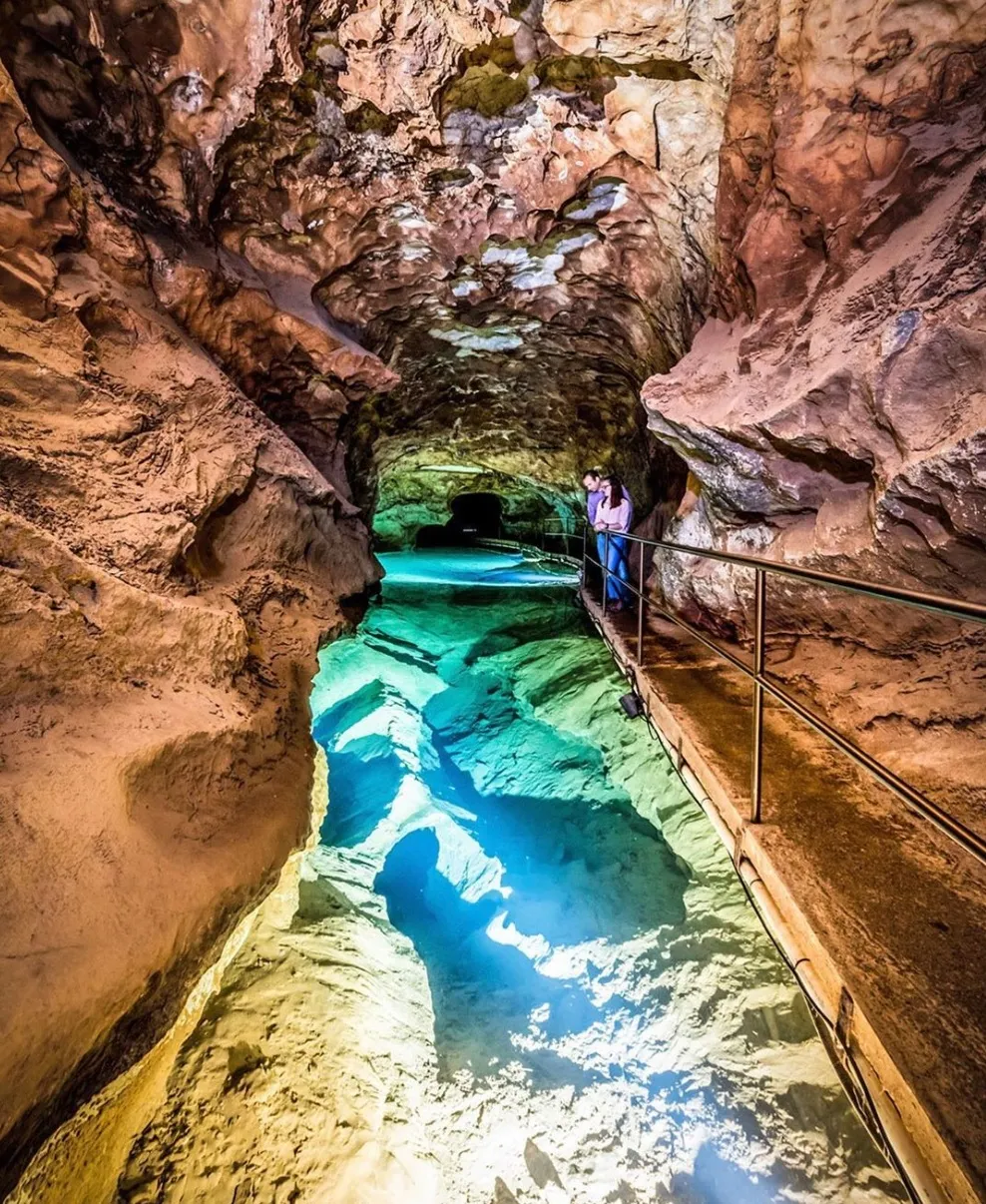
History
Formation
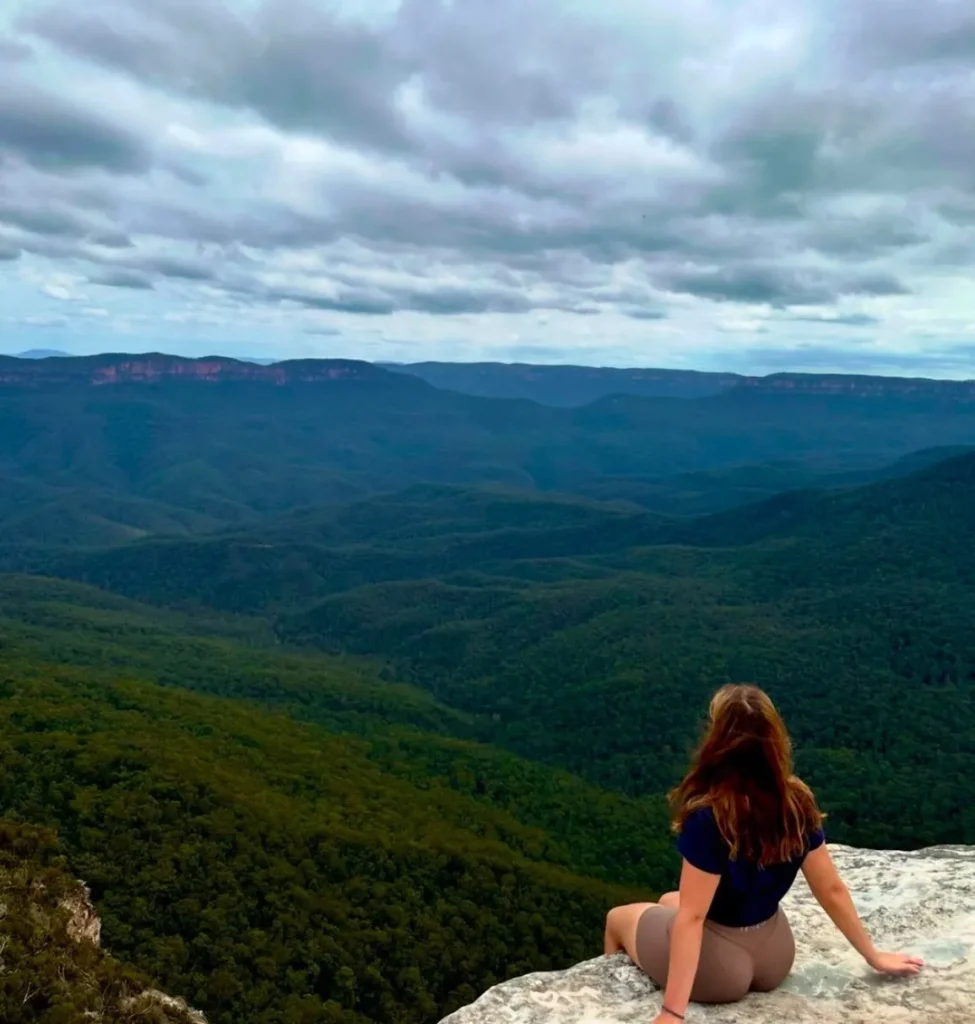 It is believed that the Blue Mountains were formed millions of years ago when the sea completely covered the area. This began when extensive tailings fell into seawater and covered the land, eventually being compressed into hard sandstone and shale. The large stones formed a rough land area as the water receded. The sandstone and shale were left in the hands of natural elements, such as water erosion, wind, and even volcanic eruptions, slowly forming the mountains, rock formations, and canyons we see today. The whole process took about 250 million years!
History of the Indigenous
The first people to settle in the Blue Mountains were the indigenous people of Australia – the Australian Aborigines. The local tribes of the region were the Gundungurra and Darug, as well as the Burra-Burra tribe, which lived in the neighbouring Jenolan Caves. It is unknown how long these tribes have inhabited the region, but it is estimated to be several thousand years.
European discovery
Invasion of Europe in Australia began in 1788, but the Blue Mountains were not settled until 1813. This was due to the region’s rugged terrain, which Europeans found too difficult to cross. Unlike the indigenous people of Australia, who live in harmony with the dense bush and jagged rocks of the Blue Mountains, Europeans sought to change them, hoping to build flat settlements in the mountains. However, all the surfaces were too steep for machinery and too thick for construction, leaving the Blue Mountains with a reputation for impassability. It wasn’t until 1813 that the trio of Gregory Blakeland, William Charles Wentworth and Lieutenant Lawson formed an exploration party to find habitable land in this dense area. During their exploration, the team encountered many difficulties and almost gave up until they discovered a gentle slope on the western side of the Blue Mountains that gave rise to the very first road in the Blue Mountains in 1814.
The name of the Blue Mountains
Many people think the name “Blue Mountains” is strange for a green region, but it is appropriate. It’s all about the unique trees that grow there: eucalyptus trees! Eucalyptus is one of the most common plants in this region, widespread in the mountains, gorges and valleys. A unique feature of eucalyptus is the oil that its leaves are saturated with. When the sun is hot, the temperature causes the oil to be released from the leaves as an oil mist. Although this mist is invisible up close, the light reflected from it is very clear from a distance. As a result, the entire Blue Mountains region was covered in a blue mist, giving the impression that the mountains were blue.
Activities and Sights in the Blue Mountains
The Three Sisters
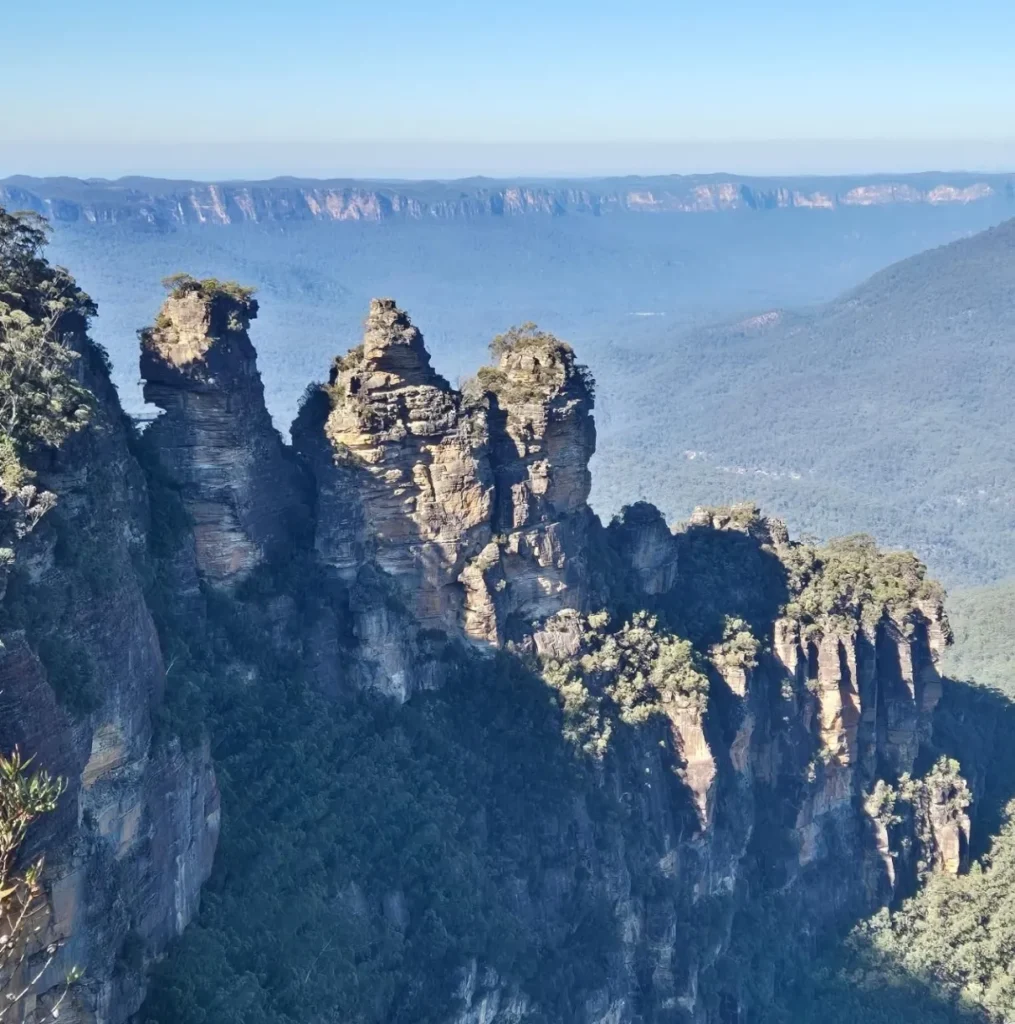 One of the most essential attractions in the Blue Mountains is undoubtedly the famous rock formation known as the Three Sisters. This natural wonder is three huge boulders atop a sandstone cliff that juts into the Jamison Valley. This structure has been part of the landscape for millions of years and has become a favourite destination and a perfect spot for tourists and locals alike. However, this rock is not just a natural wonder, as it is closely associated with the indigenous people of the region, and there is even a famous story about the time of dreams. The legend says that long ago, three beautiful sisters, Mehni, Wimla and Gunnedu, fell madly in love with three brothers from a neighbouring tribe. Still, unfortunately, both tribes were emergent, and marriages between them were forbidden. Unable to do anything about it, the brothers decided to capture the women, which led to a war between the tribes. A local magician chooses to support the women by turning them to stone to protect them from the dangers of war. However, during the battle, tragedy strikes: the witch is killed, and no one can reverse the spell and bring the woman back to life. Thus, the three sisters remained forever as stones, standing mournfully over the Jamison Valley, never to become human again.
Jamieson Valley
 The velvety green Jamieson Valley offers breathtaking natural scenery and a wealth of attractions. The valley is the most popular tourist destination in the Blue Mountains. It is known for hosting famous people over the years, including Charles Darwin, who even has a hiking trail named after him. Hiking is undoubtedly the most popular activity in the valley, with countless trails crisscrossing it, helping visitors find unique wildlife, scenic waterfalls and rivers. Travellers can extend their stay by pitching a tent in the open air in one of the secluded spots to enjoy the views.
Jenolan Caves
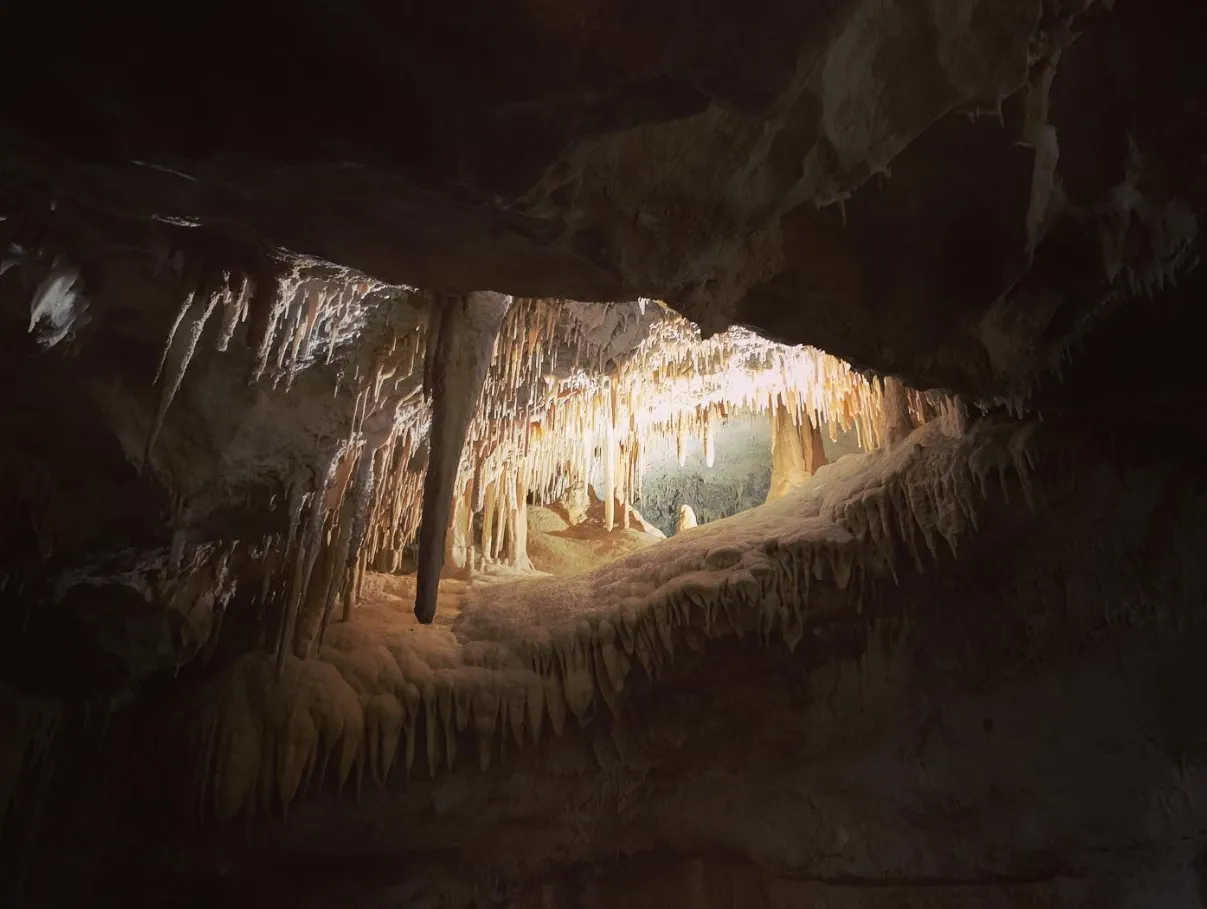 The Blue Mountains hide a spectacular series of limestone caves estimated to be 340 million years old. The Jenolan Caves are so developed that most of the cave system is so deep and narrow that people have never entirely discovered them. Visitors can move from one cave section to another on foot and by climbing up. Visitors can use the natural arches between the caves and the network of underground rivers. The caves are accessible only during guided tours. Travellers are guided through the dimly lit caves, with stories about the history and geology of each section.
Rock art
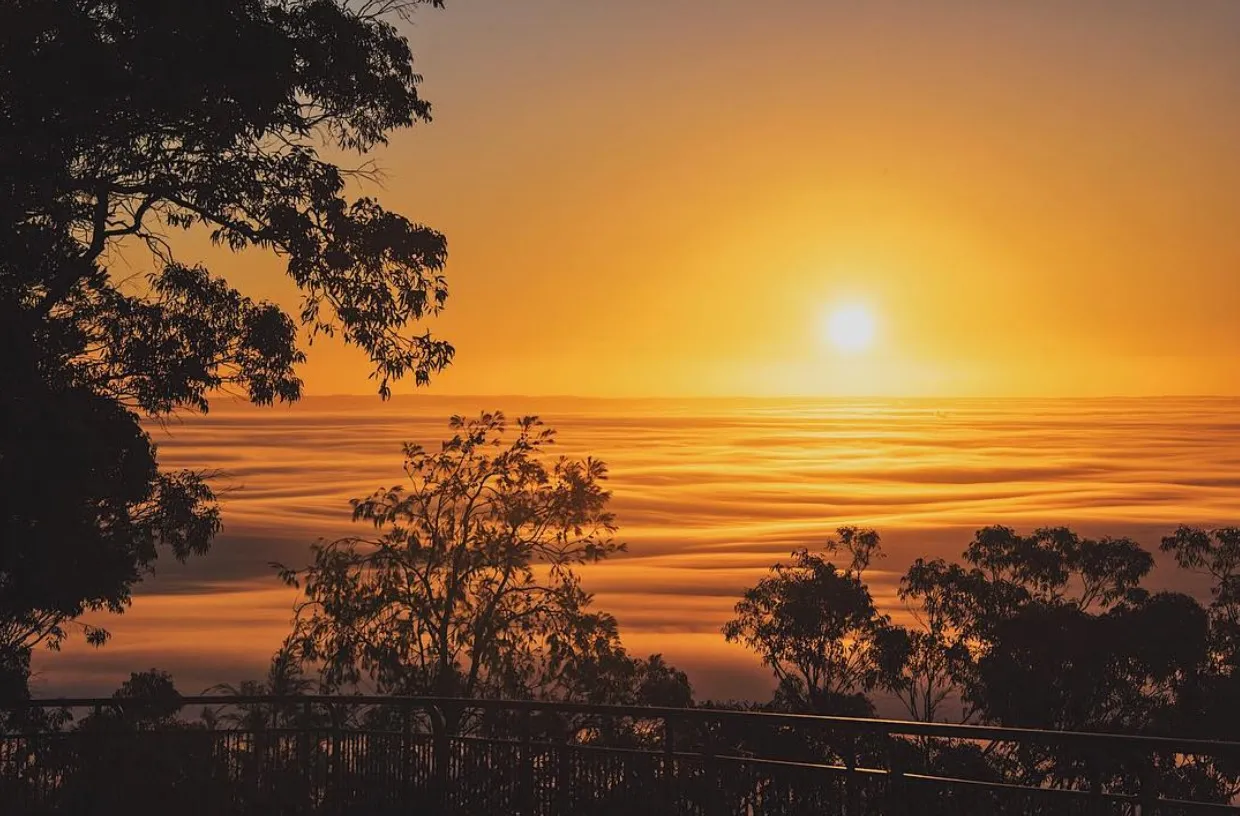 The history of the Blue Mountains is one of its most fantastic attractions, as historic tribes left behind great treasures that we can still admire today. Travel to hidden caves or gorges and admire large paintings or rock engravings depicting animals, people and stories from the Dreamtime associated with these historic communities. Each piece of art tells a part of the story of the indigenous people and the land. While there is plenty to choose from, perhaps the most impressive is the well-preserved rock art known today as the Flight of the Great Grey Kangaroo, which can be found near Hawkesbury Lookout.
The Lookouts
Govett’s Leap Lookout
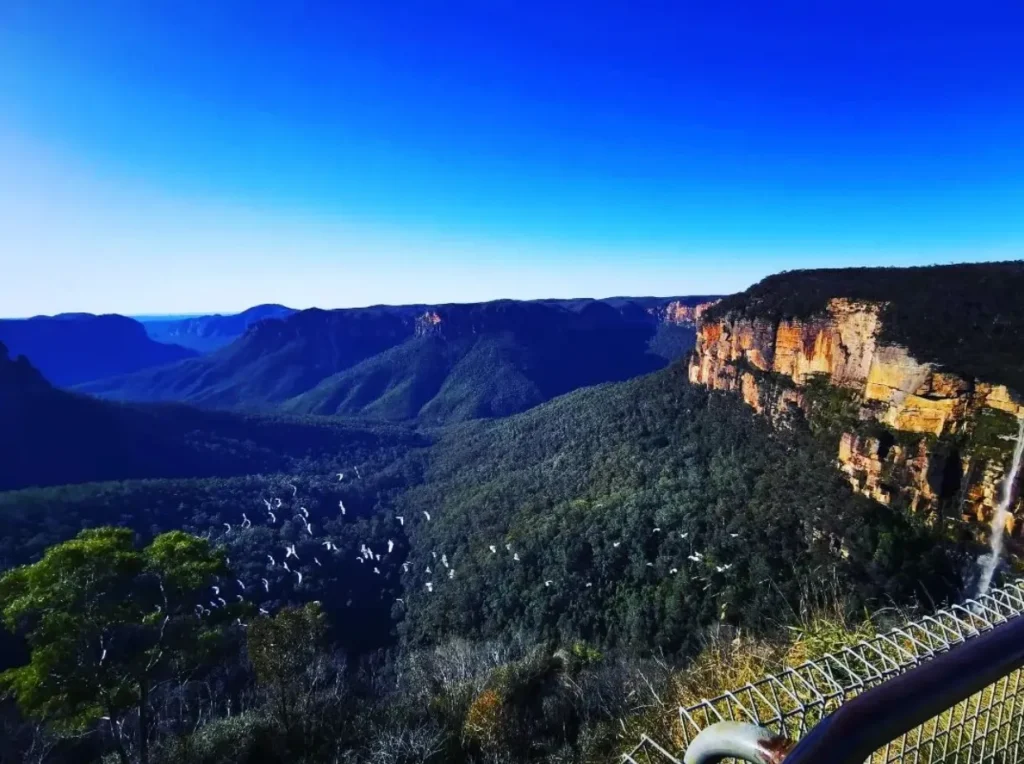
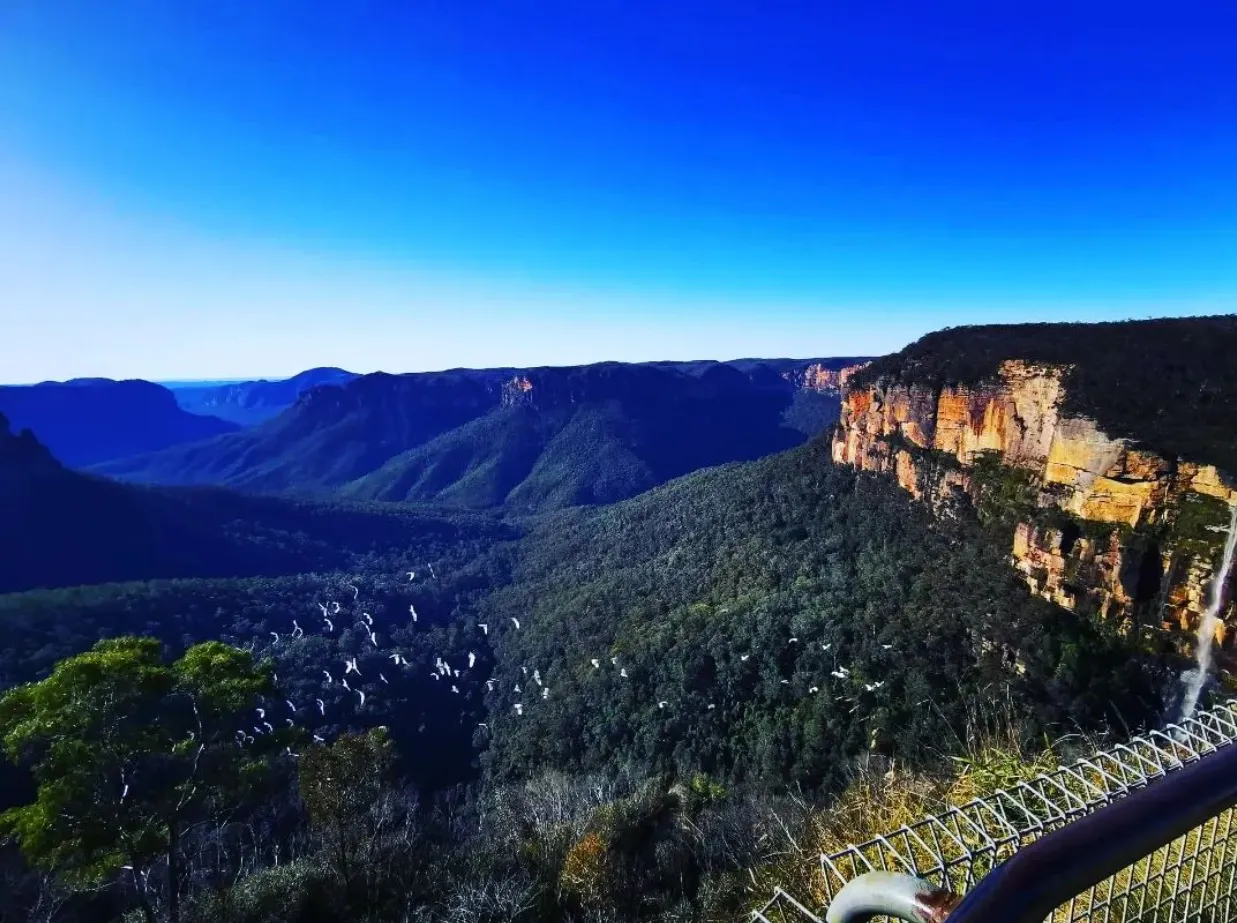 Considered one of the most scenic viewpoints with incredible scenery in New South Wales, Govett’s Leap overlooks the blue Valleys Leap Valley. The viewpoint offers an endless expanse of bushland bordered by gleaming orange sandstone cliffs, with Bridal Veil Falls cascading down the right-hand side of the viewpoint.
Evans Lookout
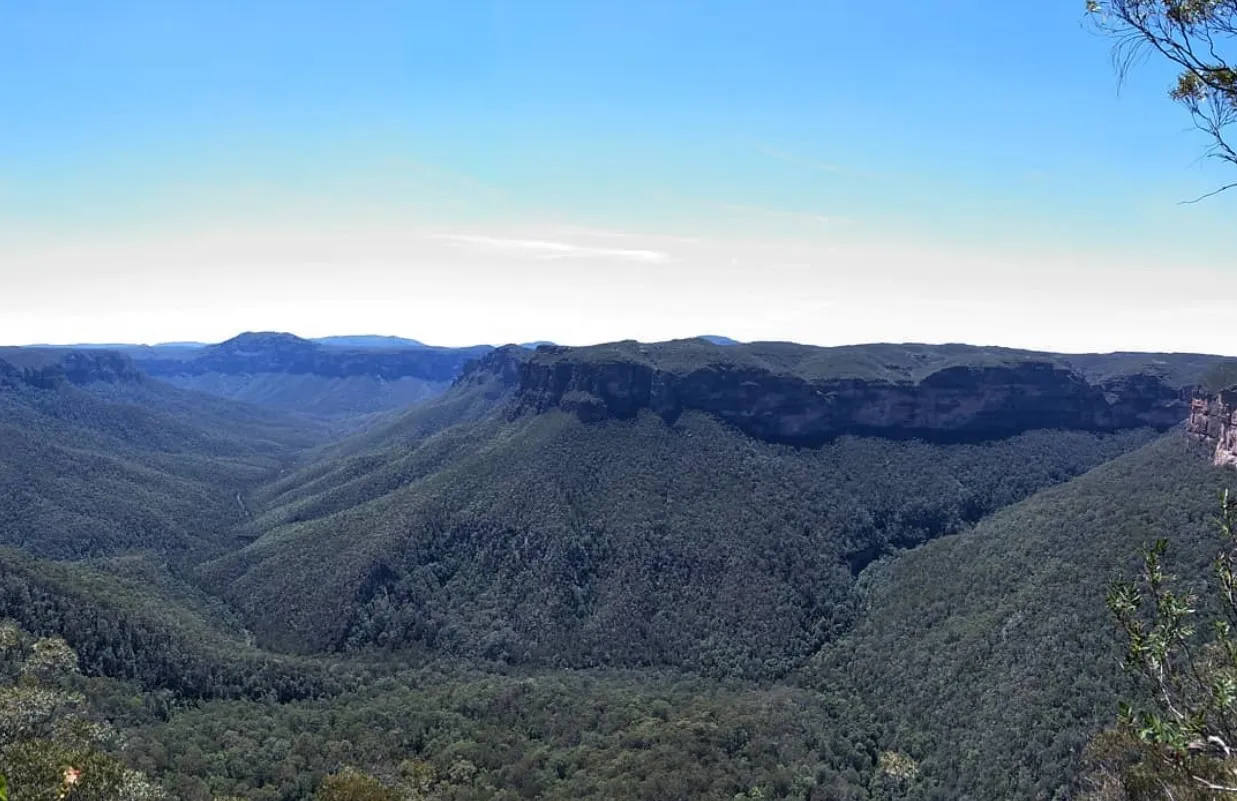 From Evans Lookout, you can see the sandstone cliffs of the Grosse Pointe Valley and the lush greenery that covers the surrounding countryside. It’s best seen at sunset when the soft colours of the setting sun reflect off the sandstone in a brilliant glow.
Echo Point
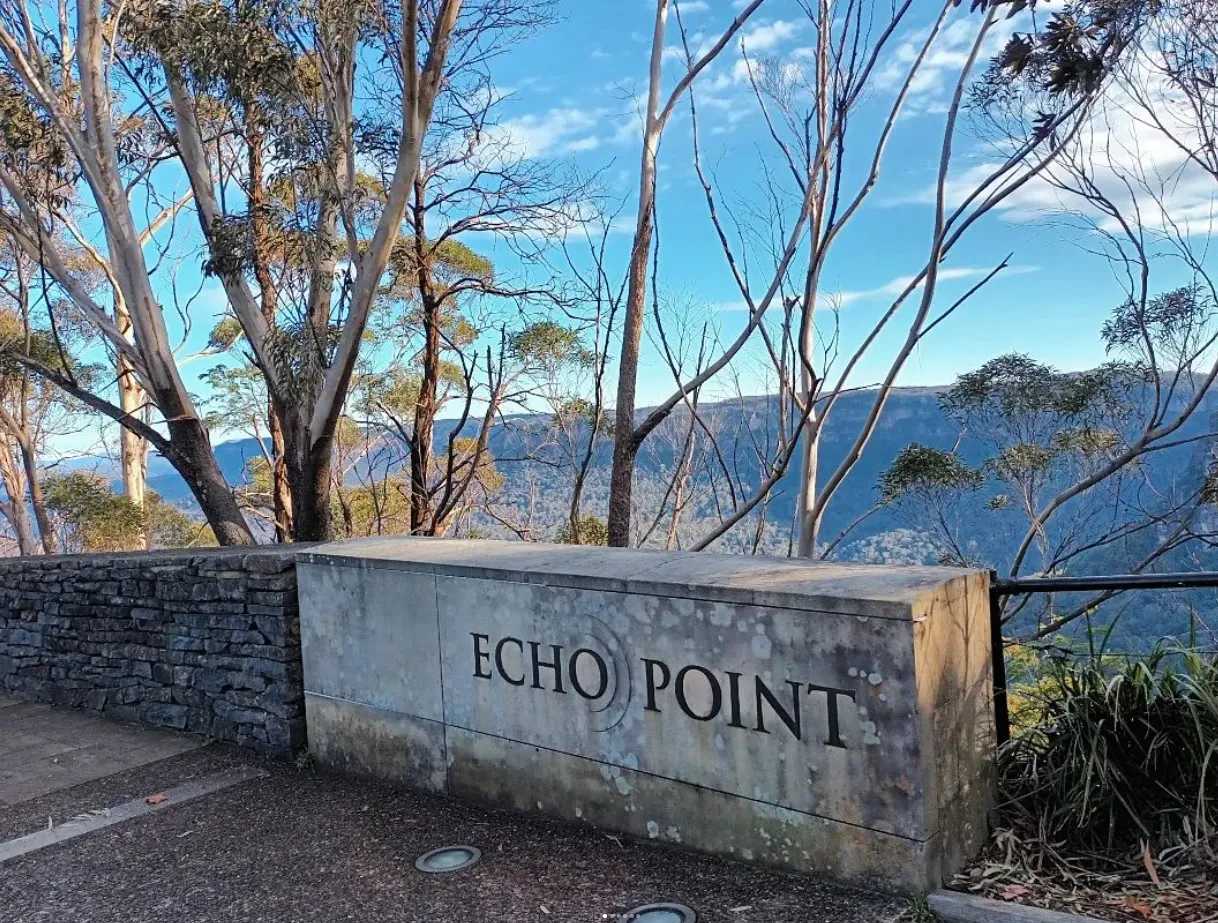 One of the most popular spots is the Blue Mountains, offering dramatic scenery of the magnificent Jamison and Three Sisters Valley.
Sublime Point Lookout
 A favourite with hikers and photographers alike, Sublime Point is aptly named and offers panoramic views of the Jamison Valley below.
Waterfalls
Wentworth Falls
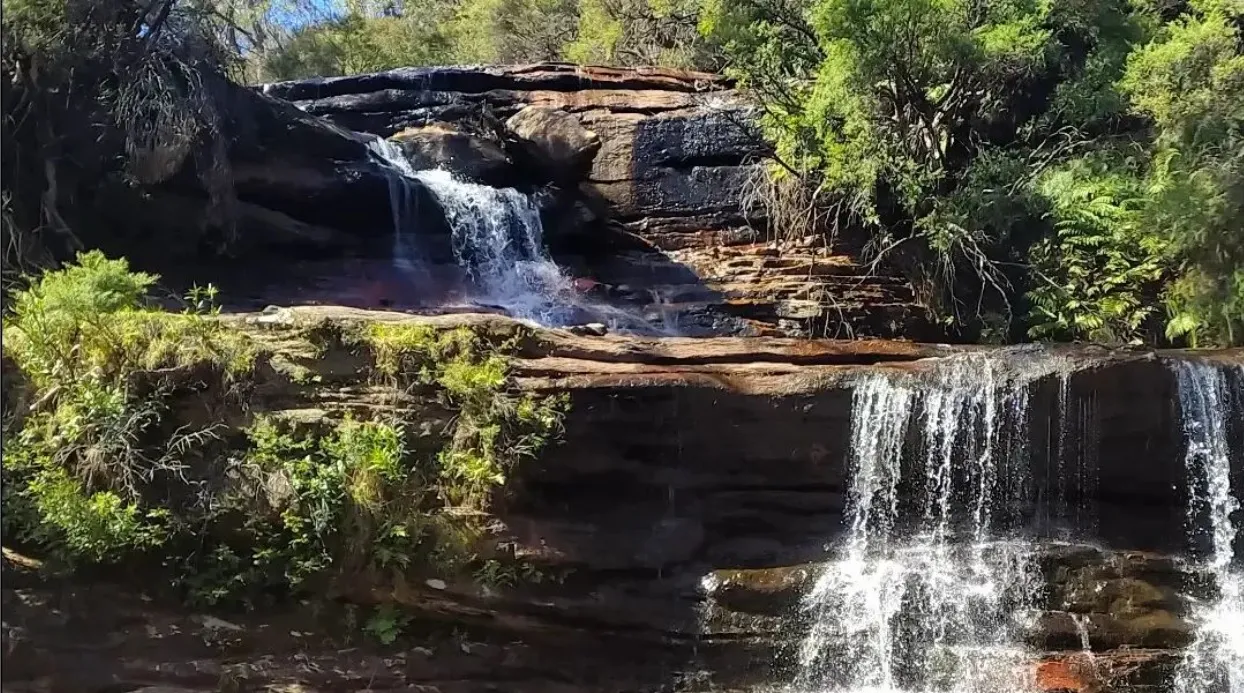 Tucked away in the wilds of the Blue Mountains, the magical Wentworth Falls offers incredible views of the valley and water from every corner of the cascade. Whether at the top of the cascade, looking out over the valley, or swimming in the pool, you’ll be mesmerised by this fabulous landscape.
Leura Waterfalls
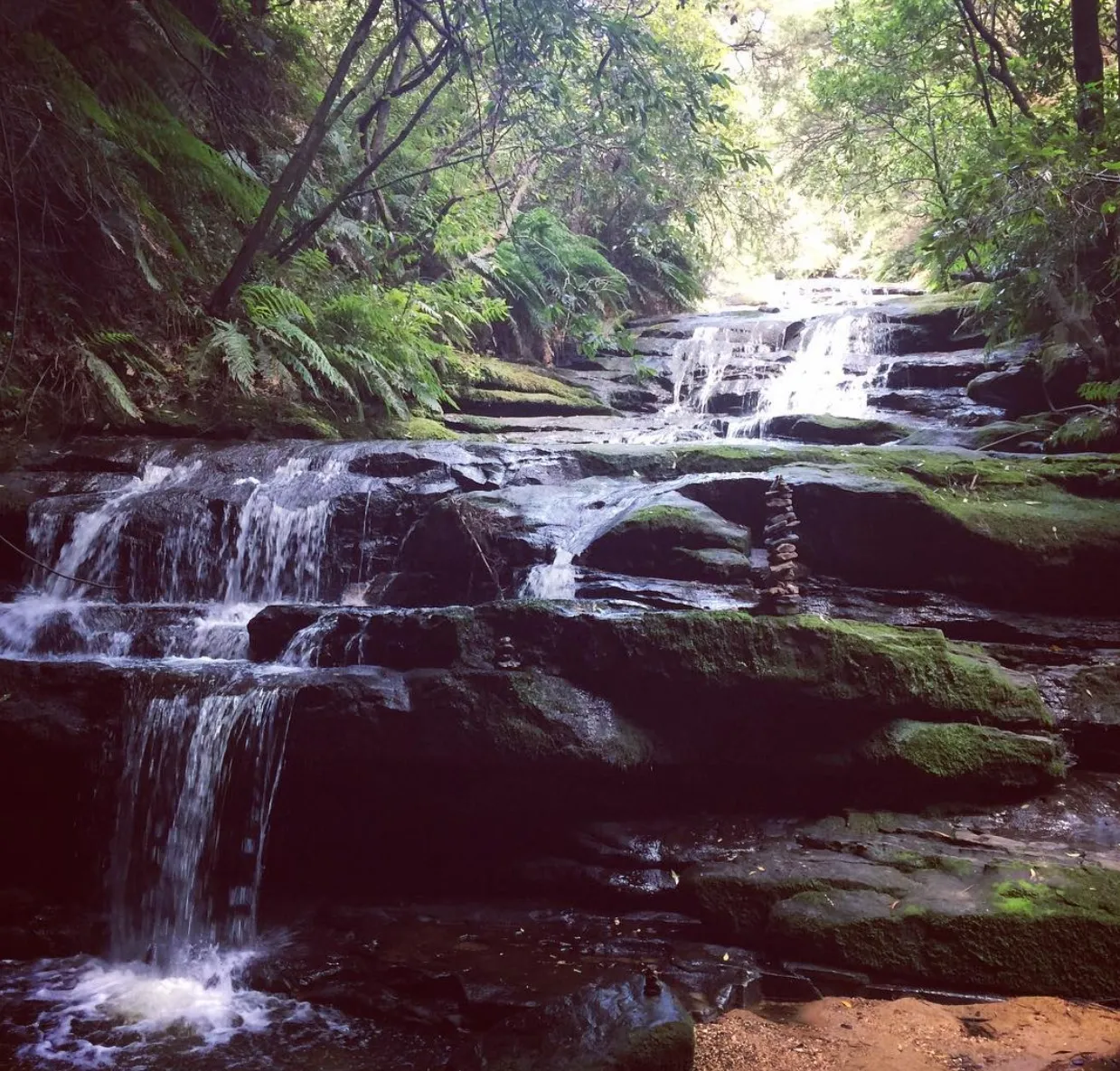 Visitors can refresh their tired feet in the pools of the Leura Cascades while enjoying the beautiful greenery that covers the area.
Katumba Falls
 Katumba Falls is a segmented waterfall located near Kamba and Echo Point. The water descends into the Jamieson Valley. Visitors can admire the roar of the water and the surrounding wildlife.
The Towns
Leura
Considered the most important tourist town in the Blue Mountains, Leura is full of souvenir shops, coffee shops and local art. The city is surrounded by bushland, which merges with the buildings to create a charming Australian provincial town.
Katoomba
Katoomba, home to Australia’s biggest tourist attraction known as the ‘Picturesque World’, is a popular destination for many travellers. The perfect starting point for hiking, epic views and gorgeous waterfalls, Katoomba is full of friendly locals and a rural atmosphere.
Scenic World
Scenic World is simply the best way to see the Blue Mountains landscape. It’s a world-guided walk in thWorldderness, with paths winding through the bush and epic views from a height that allows you to see the Blue Mountains from all angles.
Scenic Railway
This is the steepest railway in the World and is guaranteed to give butterflies to the most adventurous preorders. The original SeaWorld was built in the late 1800s but has been transformed into an adrenaline-pumping tourist attraction. With a 52-degree incline, travellers can choose the speed of the railway, turning it into a fun rollercoaster or a leisurely cruise, depending on their preferences.
Scenic Skyway
Sail 720 metres between two cliffs of the Blue Mountain and soar 270 metres above the treetops. The large gondola has large windows and a glass floor, allowing passengers to view the area 360 degrees. A maximum of 84 passengers are accepted every 10 minutes throughout the journey, so you won’t have to wait hours for your turn!
Scenic Cableway
Start your journey at the top of the mountain and slowly descend into the Jamieson Valley. The cabin has three viewing sections, offering different perspectives on the Blue Mountains depending on whether you are in the back, which provides an overlook of the entire area, or in the front, which offers close-up views of the flora and fauna.
Scenic Walkway
Scenic World offers an alternative if you’re not too fond of heights. It offers kilometres of smooth walking trails through a lush rainforest valley. Each contains a series of information panels about the plants and animals in the area. So you can get up close and personal with the flora and fauna!
The Wildlife
Hidden in this natural landscape, the Blue Mountains are home to various wildlife. More than 400 different species of animals roam the region.
Featherdale Wildlife Park
If you cannot spot wildlife on the many hiking trails, the Featherdale Wildlife Park is the place to be. It is home to several of Australia’s favourite animals, including the famous koalas, kangaroos and wombats. Educational talks are held throughout the day, and professional staff introduce visitors to the animals.
Parramatta River
The Parramatta River may not be as famous as Sydney Harbour. However, the harbour would cease to exist without it, as the Parramatta River stretches fourteen kilometres from the Blue Mountains to the harbour in the city centre. Cityscape embarks on a river cruise from the Blue Mountains and ends its adventure right in the heart of Sydney’s lights!